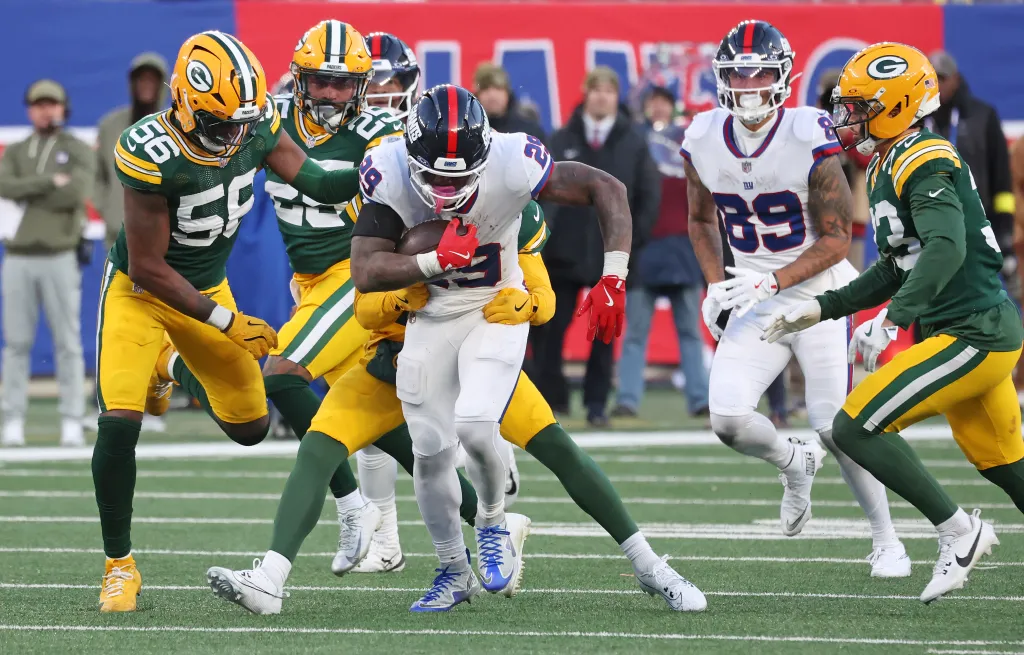
Packers vs Giants Full Player Stats & Key Contributors: Who Impacted the Game Most?
The Week 11 matchup between the Green Bay Packers and the New York Giants was a high-stakes NFC showdown that drew attention from fans and analysts alike. Both teams entered the contest with playoff hopes and performance scrutiny on every position. The game showcased a mixture of offensive efficiency, defensive resilience, and crucial individual plays that ultimately determined the final outcome. In this in-depth analysis, we break down the full player stats, highlight the key contributors, and assess who truly impacted the game the most.
Game Overview
The Packers managed a hard-fought victory over the Giants with a final score that reflected a close, competitive game. Green Bay demonstrated the ability to execute in high-pressure situations, while New York showed flashes of promise but struggled in critical moments.
This matchup was defined by strategic adjustments, explosive plays, and individual performances that shaped both the scoreboard and the flow of the game. From quarterback decision-making to defensive turnovers, every contribution counted.
Quarterback Performance Breakdown
Packers: Jordan Love
Packers quarterback Jordan Love delivered an efficient, situationally aware performance. He completed 13-of-24 passes for 174 yards with two passing touchdowns, showing poise under pressure. Love’s accuracy in intermediate routes allowed the Packers to sustain drives, while his mobility helped extend plays when defenders applied pressure.
Key contributions included:
- Successful third-down conversions at critical moments
- Two touchdown passes, including the decisive score in the fourth quarter
- Calm pocket presence to avoid turnovers
While Love’s yardage total was moderate, his efficiency and execution in high-leverage moments were crucial to Green Bay’s win.
Giants: Jameis Winston
New York Giants quarterback Jameis Winston showed a combination of yardage production and risk. Winston completed 19-of-29 passes for 201 yards and added a rushing touchdown. While he moved the ball effectively and connected with multiple receivers, his late interception in the fourth quarter was pivotal in deciding the game.
Winston’s performance highlighted both his potential and the ongoing challenges for the Giants’ offense: sustaining drives while minimizing mistakes.

Running Game Contributions
Packers Running Backs
Green Bay used a balanced rushing approach to complement the passing game.
- Aaron Jones contributed 89 rushing yards on 19 carries, maintaining short-yardage consistency.
- Emmanuel Wilson added 40 yards and a touchdown, demonstrating depth and versatility in the backfield.
The Packers’ running game helped maintain possession, control clock management, and prevent the Giants’ defense from focusing exclusively on the passing game.
Giants Running Backs
The Giants relied on a multi-faceted rushing attack.
- Tyrone Tracy Jr. produced solid yardage, sustaining drives in the second quarter.
- Devin Singletary scored two touchdowns, capitalizing on short-yardage opportunities.
Although the Giants’ rushing attack moved the chains effectively, they struggled to convert yardage into points consistently. Green Bay’s balanced run-pass mix ultimately limited the Giants’ impact in critical drives.
Wide Receiver and Tight End Impact
Packers Receiving Leaders
Christian Watson emerged as the game’s standout offensive weapon, recording 5 receptions for 64 yards and two touchdowns, including a game-winning score late in the fourth quarter. Watson’s speed, route running, and yards-after-catch ability created explosive plays that shifted momentum toward the Packers.
Other Packers receivers contributed by moving the chains on intermediate plays, allowing Love to focus on high-value targets in scoring positions.
Giants Receiving Leaders
The Giants’ receiving corps maintained offensive balance:
- Isaiah Hodgins recorded 5 receptions for 57 yards
- Wan’Dale Robinson added 4 catches for 36 yards, providing reliable short-yardage completions
Despite solid yardage, the Giants’ receivers were unable to produce decisive touchdown plays against Green Bay’s defensive coverage.
Defensive Performance
Packers Defense
The Packers’ defense played a pivotal role in the outcome. Safety Evan Williams intercepted a crucial fourth-quarter pass, sealing the victory. The defense pressured Winston throughout the game, forcing hurried throws and limiting high-impact opportunities in the red zone.
Green Bay’s ability to make stops in critical situations demonstrated the value of situational awareness and clutch playmaking.
Giants Defense
The Giants’ defense produced solid plays but lacked the consistency to change the game’s momentum. While they generated pressure and limited explosive plays at times, they were unable to force turnovers or prevent Green Bay from converting key third downs.
Key takeaway: The Packers’ defensive plays in high-leverage situations were arguably the most decisive factor in the final result.
Special Teams Contributions
Special teams maintained strategic field positioning throughout the contest. The Packers’ coverage units minimized return yardage, forcing the Giants to start drives deep in their territory. Both teams converted extra points and field goals efficiently, but Green Bay’s situational punting helped control the clock and maintain possession advantages.
Statistical Overview
Total Yardage
The Packers totaled 296 yards, while the Giants amassed 336 yards. Despite the Giants’ yardage advantage, Green Bay maximized efficiency in critical moments, turning drives into points and securing key third-down conversions. For fans looking for a deeper dive into every player’s contribution, check out the Green Bay Packers vs New York Giants player stats page, which provides full stats for all offensive and defensive contributors.
Turnover Margin
The Packers forced one critical turnover, while the Giants committed one turnover in the fourth quarter. Turnovers highlighted the importance of situational execution over cumulative yardage.
Third-Down and Red-Zone Efficiency
The Packers converted a higher percentage of third downs and executed in red-zone situations. The Giants struggled with red-zone efficiency, limiting touchdown production.
Key takeaway: Execution in key situations outweighed raw statistics in determining the game’s outcome.
Coaching and Game Strategy
Packers Coaching
Matt LaFleur’s game plan combined balanced rushing and passing attacks with emphasis on situational awareness. Strategic substitutions and careful clock management contributed to Green Bay’s success in high-pressure scenarios.
Giants Coaching
Mike Kafka employed aggressive fourth-down decisions and an up-tempo offense. While some plays yielded yardage, the risk-reward strategy ultimately backfired with a late interception and missed opportunities in the red zone.
Fantasy Football Takeaways
For fantasy managers, the game offered insight into players with high-impact potential:
- Christian Watson delivered red-zone and scoring efficiency
- Jordan Love demonstrated mid-tier QB reliability
- Devin Singletary provided short-yardage scoring opportunities
- Jameis Winston produced yardage but carried turnover risk
Players performing in high-leverage situations proved more valuable than raw yardage alone.
Key Game-Changing Moments
- Watson’s fourth-quarter touchdown reception
- Evan Williams’ interception to end the game
- Green Bay’s third-down conversions late in the game
- Winston’s interception under pressure in the final minute
These moments defined the game’s outcome and highlighted the impact of individual contributions beyond raw statistics.
Who Impacted the Game Most?
While multiple players contributed, Christian Watson and Evan Williams arguably had the most influence: Watson for offensive scoring and game-changing plays, and Williams for defensive execution that secured the win. Jordan Love’s quarterback efficiency and Aaron Jones’ consistency in the rushing attack also played significant supporting roles.
For the Giants, Devin Singletary’s touchdowns and Winston’s yardage production were notable, but the lack of red-zone efficiency and turnovers limited their overall impact.
Season Implications
The Packers’ win strengthened playoff positioning, demonstrating resilience and situational efficiency. Their combination of passing, rushing, and defensive execution showcased a team capable of winning close games.
For the Giants, the defeat emphasized the need to improve turnover management, red-zone execution, and defensive consistency. While the yardage and individual stats were promising, translating performance into wins remains a challenge.
Conclusion
The Week 11 matchup between the Packers and Giants provided a clear illustration of how individual performances, strategic execution, and situational efficiency impact NFL games. While yardage alone doesn’t guarantee success, the Packers’ combination of efficient quarterback play, explosive receiving contributions, and critical defensive plays secured a hard-fought victory.
Fantasy managers, analysts, and fans can glean valuable insights from who truly impacted the game most: explosive playmakers like Christian Watson, defensive clutch performers like Evan Williams, and consistent contributors like Aaron Jones.
The matchup reinforces that in the NFL, timely execution, situational awareness, and high-leverage performance are just as important as cumulative statistics.